

Why Do You Need a High-Pressure Regulator for Your Gas
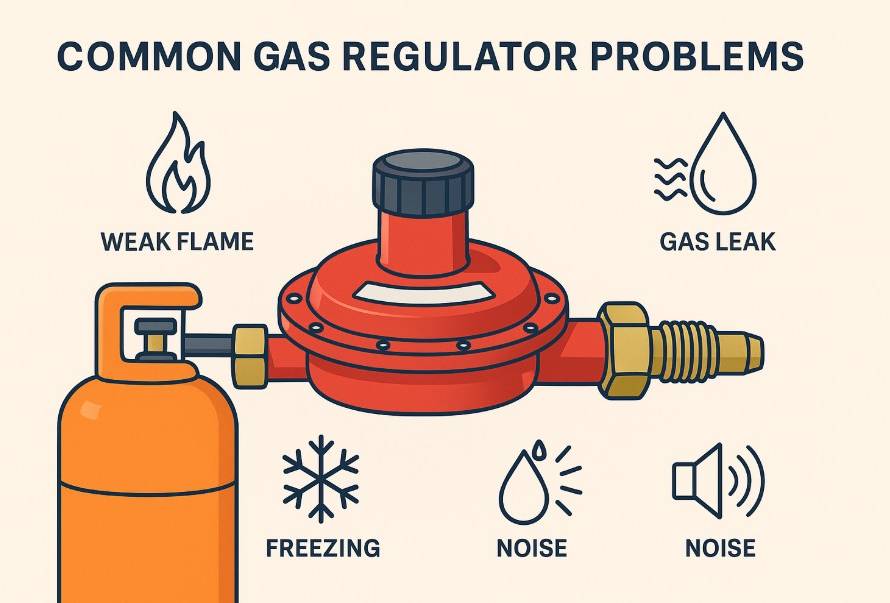
Gas pressure regulators play a crucial role in both residential and industrial applications, ensuring safety and efficiency in gas distribution. They are commonly used in heating furnaces, gas grills, kitchen equipment, and other systems that require controlled gas flow.
High-pressure regulators help reduce the pressure from high-pressure supply tanks or lines to a safe, usable level for different applications.
Most gas regulators are designed with three essential components:
- Sensing Element – Detects pressure changes.
- Control Element – Adjusts gas flow accordingly.
Loading Mechanism – Typically a spring, which determines the delivery pressure of the regulator.
What Is a High Pressure Gas Regulator?
A high pressure gas regulator is a control device that reduces and stabilises gas pressure from a high-pressure source to a safe, usable level. It is commonly used in industrial systems, laboratories and gas distribution networks to ensure safe and consistent gas flow.
How Does a High-Pressure Gas Regulator Work?
When you adjust the hand knob on a gas regulator, the spring inside compresses, which causes the sensing element (usually a metal or elastomer diaphragm) to respond. This movement displaces the diaphragm, which then pushes the control valve, increasing or decreasing its size to regulate gas flow and maintain the desired pressure.
Common Types of High-Pressure Gas Regulators
In Malaysia, several types of gas regulators are commonly used:
Line Gas Pressure Regulator
Designed for low-pressure pipelines that work with high-pressure cylinder regulators. They can maintain a pressure level of approximately 250 to 400 PSI.
General Purpose Gas Pressure Regulator
Cost-effective and durable, these are commonly used in non-corrosive environments such as maintenance shops, pilot lights, and general industrial applications.
Single-Stage and Two-Stage Regulators
Single-stage regulators
adjust pressure in one step and are ideal for short-term, lower-demand applications.
Two-stage regulators
provide more precise control by reducing pressure in two stages, making them more stable for long-term applications.
High-Purity Gas Pressure Regulator
Designed for applications requiring minimal contamination, featuring high-purity seals and metal diaphragms to prevent inboard diffusion.
Special Service Gas Pressure Regulator
Engineered for specialized uses such as ultra-high pressure, corrosion resistance, and acetylene applications.
How to Select a High-Pressure Gas Regulator
Selecting the right gas regulator requires careful evaluation of your needs. Here’s a step-by-step guide:
Step 1: Determine the Required Pressure
Understanding both the inlet pressure (pressure from the gas source) and outlet pressure (required pressure for the application) is critical. The regulator must match these specifications to ensure safe and efficient operation.
Step 2: Identify Gas Type and Concentration
The composition of the gas determines the type of regulator material required. Common gases include:
Non-Corrosive Gases:
-
- LPG (Liquefied Petroleum Gas)
- Natural Gas
- Carbon Monoxide (CO)
- Carbon Dioxide (CO2)
- Oxygen (O2)
Highly Corrosive Gases:
-
- Chlorine (Cl2)
- Ammonia (NH3)
- Nitrogen Dioxide (NO2)
- Hydrogen Cyanide (HCN)
Step 3: Determine the Inlet-Outlet Connection
The regulator’s inlet-outlet connection should match the gas system’s existing pipe size. If necessary, reducers or adapters can be used to ensure compatibility.
Step 4: Choose Between a Single-Stage or Two-Stage Regulator
- Single-stage regulators are ideal for applications where pressure fluctuations are not a major concern.
- Two-stage regulators provide better pressure stability and are ideal for applications requiring consistent gas flow over extended periods.
Safety Considerations
Before using a high-pressure gas regulator, ensure proper training or supervision by a qualified gas regulator supplier. Incorrect usage can result in gas leaks, pressure inconsistencies, and safety hazards.
Need Assistance?
If you’re unsure about the right regulator for your needs, consult a reliable gas regulator supplier such as COMeT Integrated. Our team of experts can help you find the best solution for your specific application. For more information, visit COMeT Integrated.
Frequently Asked Questions (FAQ) Gas Pressure Regulator
What pressure is considered high pressure in gas systems?
High pressure typically refers to gas systems operating above 10 bar (145 psi), depending on application and industry standards. Industrial and compressed gas systems often require specialised high pressure regulators.
How long does a gas regulator last?
A gas regulator generally lasts 5 to 10 years. Lifespan depends on gas type, operating pressure, environmental conditions and maintenance practices.
Can a high pressure regulator reduce pressure to very low levels?
Yes, a high pressure regulator can reduce inlet pressure to lower, controlled outlet levels. However, extremely low pressure applications may require a two-stage regulation system.
What happens if a gas regulator fails?
If a gas regulator fails, it may cause unstable pressure, gas leaks, equipment damage or safety hazards. Immediate inspection and replacement are necessary.
Is a high pressure regulator required for LPG systems?
Yes, high pressure regulators are required when LPG is stored in pressurised cylinders or tanks to safely reduce pressure before distribution or equipment use.