Turbine Meter Calibration Best Practices & Maintenance Tips
Accurate flow measurement is the backbone of efficient industrial operations. From gas distribution and petrochemical processing to water treatment and manufacturing, turbine meters are widely used for their high accuracy, fast response time, and repeatable performance.
However, even the best turbine meter will drift over time without proper calibration and maintenance. This article outlines proven turbine meter calibration best practices and maintenance tips to help businesses maintain accuracy, reduce downtime, and comply with industry standards.
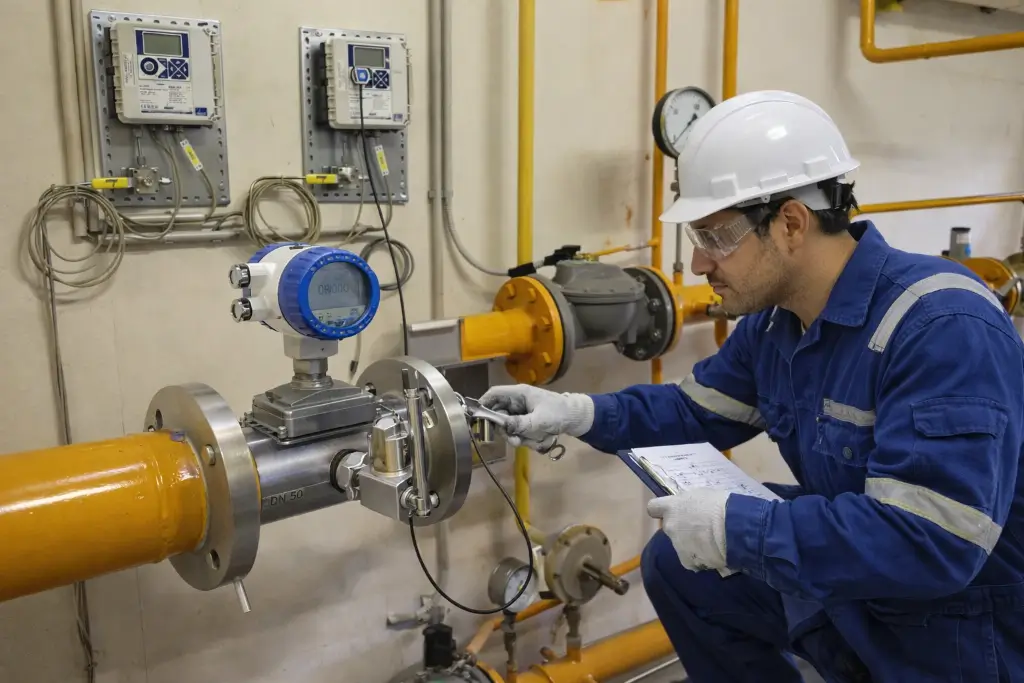
Why Turbine Meter Calibration Matters
A turbine meter measures flow by converting the velocity of a fluid into rotational movement. Over time, factors such as wear, contamination, temperature variation, and pressure changes can affect this rotation—leading to inaccurate readings.
Poor calibration can result in:
- Billing disputes and revenue loss
- Process inefficiencies
- Regulatory non-compliance
- Unplanned shutdowns
Regular calibration ensures your turbine meter delivers traceable, reliable, and repeatable measurements, which is critical in high-value industrial applications.
Understanding Turbine Meter Calibration
Calibration is the process of comparing a turbine meter’s output against a known reference standard under controlled conditions. The goal is to verify accuracy and apply correction factors if deviations are detected.
Common Calibration Methods
- Gravimetric calibration (mass-based reference)
- Volumetric calibration (prover systems)
- Master meter comparison
- In-situ calibration for installed meters
The chosen method depends on fluid type, flow range, operating pressure, and industry regulations.
How Often Should a Turbine Meter Be Calibrated?
There is no one-size-fits-all answer. Calibration frequency depends on usage intensity and application criticality.
General Industry Guidelines
- Gas applications: Every 6–12 months
- Custody transfer systems: As required by regulatory bodies
- Harsh or dirty fluids: More frequent calibration
- Stable, clean environments: Longer calibration intervals
Best practice is to establish a historical performance trend and adjust calibration schedules accordingly.
Turbine Meter Calibration Best Practices
1. Calibrate Under Real Operating Conditions
Where possible, calibration should match actual operating:
- Flow range
- Pressure
- Temperature
- Fluid properties
This improves accuracy and reduces real-world measurement errors.
2. Use Traceable Calibration Standards
Best Practice
Always calibrate against internationally recognised standards such as ISO, OIML, or NIST-traceable references. This supports compliance and audit readiness.
3. Record and Analyse Calibration Data
Maintain detailed calibration records including:
- As-found and as-left results
- Flow curves
- Correction factors
- Environmental conditions
Trend analysis helps identify early performance degradation.
4. Avoid Single-Point Calibration
Turbine meters should be calibrated across multiple flow points (low, medium, and high flow). This ensures accuracy across the full operating range.
5. Verify K-Factor Stability
The K-factor (pulses per unit volume) is central to turbine meter accuracy. Any drift may indicate:
- Bearing wear
- Rotor damage
- Contamination
Monitoring K-factor changes is a powerful diagnostic tool.
Essential Turbine Meter Maintenance Tips
Calibration alone is not enough. Preventive maintenance significantly extends turbine meter lifespan and accuracy.
1. Keep the Fluid Clean
Contaminants are the biggest enemy of turbine meters.
Best practices:
- Install upstream strainers or filters
- Regularly inspect and clean filters
- Avoid operating beyond design specifications
2. Inspect Bearings and Rotor Assembly
Bearings directly affect rotational accuracy.
Check for:
- Excessive friction
- Noise or vibration
- Signs of corrosion or wear
Replace worn components promptly to prevent cascading damage.
3. Maintain Proper Installation Conditions
Incorrect installation causes flow distortion.
Ensure:
- Adequate straight pipe lengths upstream and downstream
- No flow disturbances (valves, elbows) too close to the meter
- Correct orientation and alignment
4. Monitor Signal Output and Electronics
Electrical issues can mimic mechanical faults.
Regularly verify:
- Pulse signal stability
- Wiring integrity
- Transmitter and pickup condition
5. Store Spare Meters Correctly
If spare turbine meters are kept on-site:
- Store in clean, dry environments
- Protect against vibration and dust
- Rotate spares periodically to avoid static bearing damage
Common Mistakes to Avoid
Many accuracy issues stem from avoidable errors:
- Skipping calibration due to “stable readings”
- Using unqualified calibration providers
- Ignoring minor deviations until failure
- Operating outside rated flow ranges
Avoiding these mistakes protects both measurement integrity and operational budgets.
Regulatory and Compliance Considerations
Industries such as oil & gas, utilities, and chemicals often require:
- Documented calibration certificates
- Traceable standards
- Defined calibration intervals
Failing to comply can lead to penalties, disputes, or loss of certification.
Why Work with a Trusted Turbine Meter Specialist?
Professional calibration and maintenance services ensure:
- Industry-compliant procedures
- Accurate diagnostics
- Reduced downtime
- Extended meter lifespan
At Comet Integrated, turbine meter solutions are supported by technical expertise, industry knowledge, and best-practice calibration approaches—helping businesses achieve reliable flow measurement with confidence.
Final Thoughts
A turbine meter is only as reliable as its calibration and maintenance programme. By following best practices, implementing preventive maintenance, and working with experienced professionals, businesses can ensure long-term accuracy, compliance, and operational efficiency.
If your process depends on precise flow measurement, investing in proper turbine meter care is not optional. It is a competitive advantage.
FAQ about Turbine Meter Calibration
How often should a turbine meter be calibrated?
Most turbine meters should be calibrated every 6 to 12 months, depending on operating conditions, fluid cleanliness, and regulatory requirements. High-accuracy or custody transfer applications may require more frequent calibration.
What are the signs that a turbine meter needs maintenance?
Common indicators include unstable readings, reduced accuracy, abnormal noise, increased pressure drop, or discrepancies between expected and measured flow values. Any sudden change in performance should trigger inspection.
Can turbine meter calibration be done on-site?
Yes. In-situ calibration is possible for many turbine meters, especially in operational facilities where removal causes downtime. However, laboratory calibration provides higher accuracy for critical applications.
What happens if a turbine meter is not maintained properly?
Poor maintenance can lead to measurement drift, mechanical wear, bearing failure, and ultimately inaccurate flow data. This may result in financial loss, compliance issues, or process inefficiency.
Does turbine meter calibration affect process downtime?
Planned calibration minimises downtime. Working with an experienced service provider allows calibration to be scheduled during maintenance windows, reducing operational disruption.
What components wear out most in a turbine meter?
The most wear-prone components are bearings, rotor blades, and signal pick-ups, especially in applications with dirty or high-velocity fluids. Regular inspection extends overall meter lifespan.
Are turbine meters suitable for all types of fluids?
Turbine meters perform best with clean, low-viscosity fluids. Fluids containing solids, debris, or heavy contaminants require additional filtration or alternative flow measurement technologies.
How accurate is a turbine meter after calibration?
When properly calibrated and maintained, turbine meters can achieve accuracy levels of ±0.5% or better, depending on design and application.
Do turbine meters need recalibration after repair or replacement?
Yes. Any repair, component replacement, or mechanical adjustment requires recalibration to ensure measurement accuracy and traceability.
Why choose a professional turbine meter service provider?
A professional provider ensures:
- Traceable calibration standards
- Industry compliance
- Accurate diagnostics
- Longer meter lifespan
- Reduced risk of measurement errors
This is especially critical for regulated and high-value industrial processes.
Disclaimer
This article is intended for general informational purposes only. Always consult a qualified professional or certified gas technician before performing installation, repair, or calibration of gas detection systems. Improper handling of gas lines or detectors can result in serious injury or damage.